Tuesday, 18 October 2011

Tuesday 18 October

Proper snow.
We had a dusting of snow a couple of weeks ago, but this morning Beinn a Ghlo is white from top to bottom - well we can only see the bottom, the rest is in cloud, possibly still snowing up there.
Hard to see the snow when there's so much cloud!
Snow on Ben Vrackie which wasn't in cloud!

Autumn in Logierait Woods. Looks a different place completely to the snowy mountains.

It's still very autumnal in the woods with golden leaves and lots of fungi, but winter has definitely come to the hills.

Monday, 10 October 2011

Monday 10th October

The rain over the last few days has made it great for seeing rainbows. There has been one out most days now which is always pretty to look at. Nobody ever sees the same rainbow; the rainbow you see is unique to you because it all depends on where you are standing how the light is refracted through the rain drops. It just makes them a bit more special and intriguing to look at.

Whilst out on a land rover tour we were very lucky enough to see some stags barking at each other. I say see because we couldn’t hear them because of the noise of the river. There were several lone stags barking and others trying to hold a group of females called a harem. At one point another stag came over to challenge a harem holder and they had a roaring competition. He obviously lost because the next moment he was gone and no battle ensued. This is a great time of year for hearing them and seeing them, as long as you don’t try and get too close as they can be dangerous during the rutting season.

We also saw several peregrines perched on the line or flying around and spotted some red squirrels up at Gilberst bridge and forest lodge. The red squirrels can be found right up into the glens even though there is not much woodland cover further up.

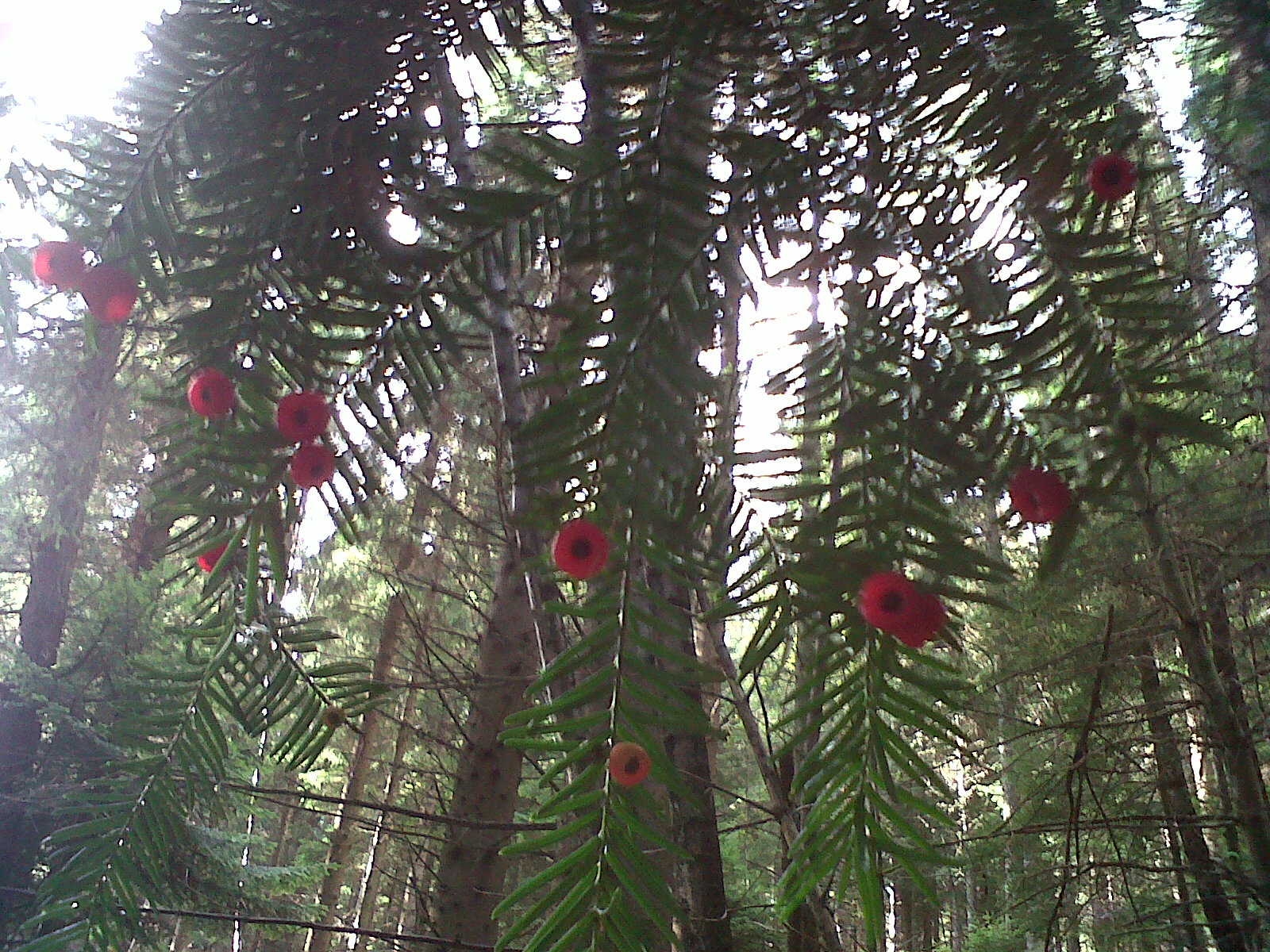
The ‘yew berries’ are out now which will be making a good feast for birds and badgers. It is not actually a berry per say but is a seed covered by a sweet, mucilaginous appendage called an aril. The seed itself is full of toxic alkaloids which make it very poisonous but birds and badgers are able to eat it because the seed passes through their body intact. They can then disperse the seeds in their faeces and allow the yew tree to establish elsewhere.

Wednesday, 5 October 2011

Wednesday 5th October

We were recently at the highland wildlife park with the group of children from nature club. Although it rained all day they all still had a great time looking and learning about all the different animals and then playing in the park after they spent all their pennies in the shop. The animals were quite active despite the weather and we had a close up look at the polar bear whilst it was being fed. The tigers and wolves were walking about and came right up the edge of the fence so we were able to admire these beautiful creatures at close range. The pine marten was also pacing about its enclosure, the wildcats were running about and the capercaillie was perched in a tree examining its surroundings. It was really nice to get up close and personal with some of Scotland’s native species.

Watching the polar bear feed

Looking at the tigers


Thursday, 29 September 2011

Thursday 29 September

We are in the process of replacing all the waymarkers on our waymarked trails. Many of the posts are originals from when the trails were set up in 1996, so have done well to last 15 years. Today pupils from Pitlochry High School Rural Skills class gave us a hand on the Red Squirrel Trail. They realised it can be quite hard work digging a hole!


Thursday, 22 September 2011

Thursday 22 September


Autumn colours in Glen Tilt

The equinox has been, nights are now longer than days, and autumn has definitely arrived in Blair Atholl. Although many people might suggest that we haven't had a summer anyway, the trees have now started to turn, leaves are falling, and the nights are definitely getting chilly. Give it a couple more weeks and the autumn colours should be looking really spectacular.

The squirrels definitely think it's autumn too, collecting and stashing food for the winter. Although they don't hibernate, they spend a lot more time in their dreys in the winter and don't go out at all on bad weather days. They stash food now so that in the middle of winter it's easy and quick to gather it and then they can quickly get back to the warmth of the drey.

Off to get the next nut
Stashing nuts amongst the vegetation
Sitting in the wildlife hide this morning, I watched a busy squirrel at work. It collected a nut, bit the top off - perhaps to give it a scent for finding it later, and then buried it amongst the vegetation. This went on for about 20 minutes before the squirrel decided maybe it could have a reward and ate one of the nuts. Meanwhile the coal tits were busy taking sunflower seeds that had been spilled by the squirrel.

Friday, 16 September 2011

Friday 16 September

Busy squirrels.

Our resident red squirrels always love the peanut/ hazelnut / sunflower seed mix we put in our squirrel feeders out in the woods. However, they are emptying them slightly less quickly than usual just now, as the beech trees are providing an alternative feast. Standing under some of the big mature trees it is very difficult to see the squirrels because there are so many beech leaves, but you can hear the pop of the nuts being opened by the squirrel and then the rustles and plops as the husks are tossed away. Beech trees only have good 'mast ' years every few years, but when they do it's a great time for the squirrels to feed up.

Young squirrel enjoying one of our feeders.
 

Beech nut shells discarded by squirrels.
 The only downside is that it benefits the grey squirrels a lot too, and makes them more likely to spread out into this area. In fact one was recently spotted by a resident at Fenderbridge. If you see a grey squirrel in the Blair Atholl / Calvine / Struan area then please let us know as soon as possible.

Thursday, 8 September 2011

Thursday 8th September

We have recently made improvements to one of our access points on the Glen Banvie trail. Where there used to be a boardwalk and steps over the deer fence (in the middle on the trail) we have now installed a gate to make access much easier, especially with bikes. On the way back from removing the boardwalk we spotted a black grouse standing on the moorland relaxing in the sun. It was a nice sight watching it in the middle of purple heather. 
New gate on the right
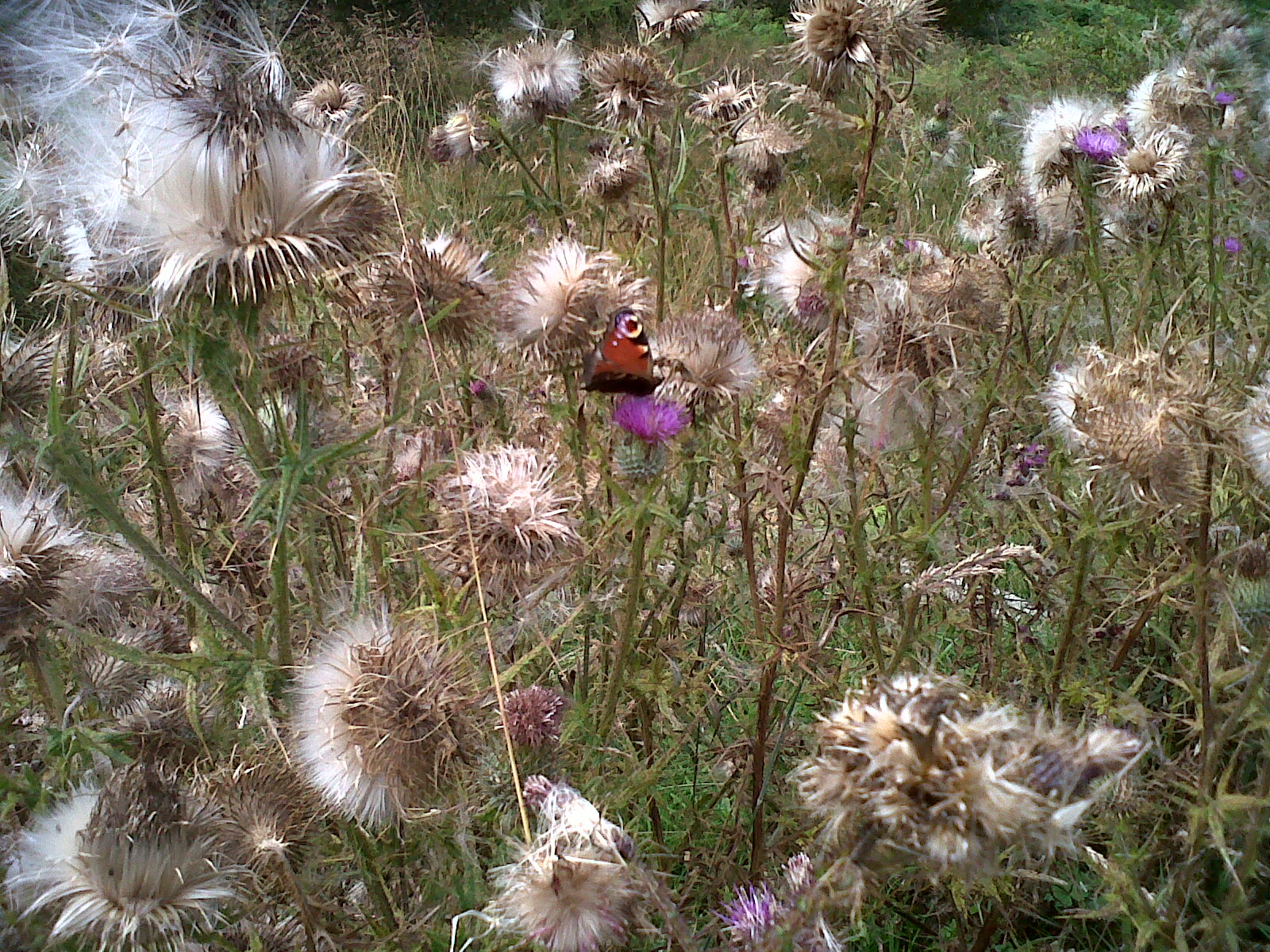
The Scottish thistles have begun to set seed now on the path to Loch Ordie with only a few flowering plants still about which are still a good source of food for insects, including this peacock butterfly. The thistle was taken on as the Scottish emblem during the reign of Alexander III because, as the legend goes, King Hakton of Norway ordered his army of men to invade Scotland, landing in Coast of Largs. They intended on taking the Scots by surprise by removing their shoes so they didn’t make a sound and creeping up on them during the night. Unfortunately one of the men stood on a thistle, yelped out and alerted the Scottish helmsmen of the invasion which led to the Scots winning the battle.
Peacock butterfly on a Scottish thistle
We have found yet another mink footprint but this time at Cally Loch so we are doing the best we can to try and trap it in an effort to protect and save our native water voles and stop the spread of American mink.

We recently had our advanced fungi day and saw over thirty species of fungi on a very small section of the red squirrel trail. There were loads of orange birch boletes and russulas but we also found a fly agaric and honey fungus, also called bootlace fungus. Honey fungus is a gardeners and foresters nightmare. There are seven different species in the UK and they are all parasitic, killing trees quickly by attacking tree roots and decaying dead wood. You may see honey coloured mushrooms on the tree or at its base for short periods in the year but it can also be distinguished by black coloured ‘bootlaces’ which are found growing under the bark. Not all fungi are bad though and only a small number are actually parasitic. Many have a symbiotic relationship with their plant counterparts helping both parties to grow and survive and some fungi are very important for recycling dead material. It is a great time of year to go out and have a look at them so see how many species you can find. You will be surprised at how many you can get in a small area.
Fly Agaric
Honey Fungus
Honey Fungus on birch